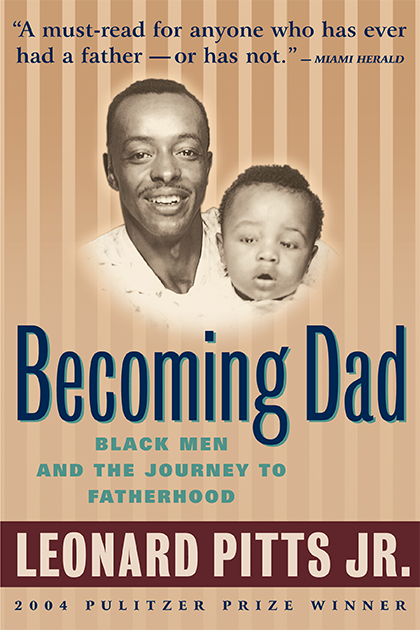
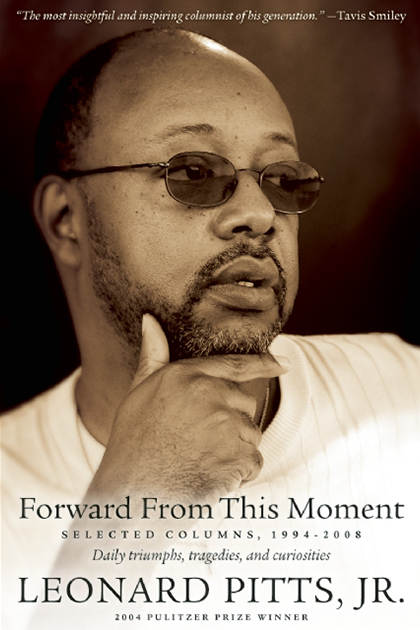
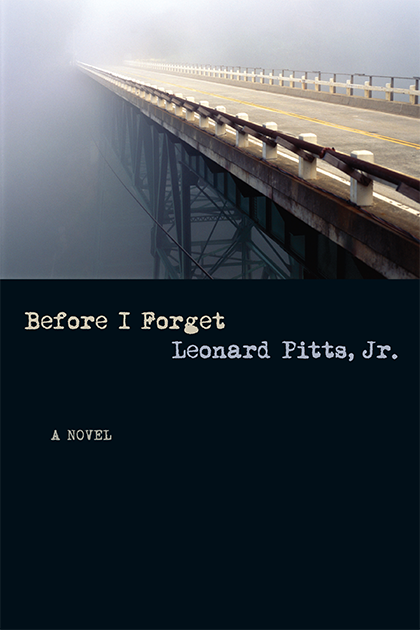
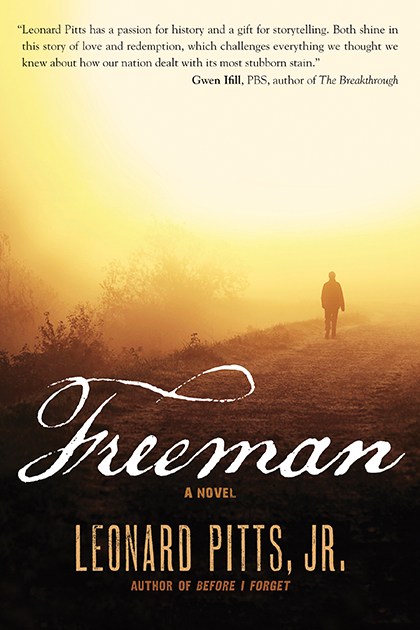
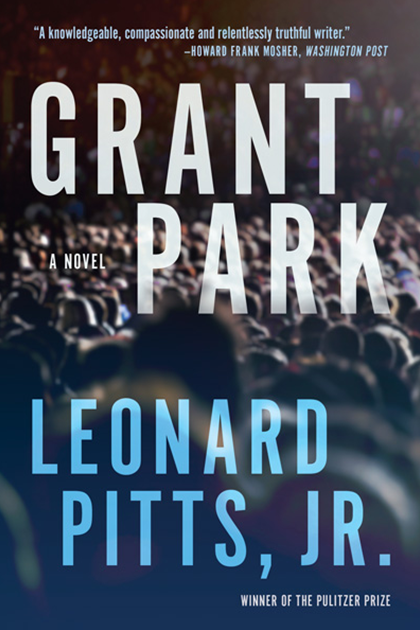
Leonard Pitts, Jr. was born and raised in Southern California and now lives in suburban Washington, DC, with his wife and children. He is a columnist for the Miami Herald and won the 2004 Pulitzer Prize for commentary, in addition to many other awards. He is also the author of the novel Freeman (Agate Bolden, 2012), Before I Forget (Agate Bolden, 2009); the collection Forward From this Moment: Selected Columns, 1994-2009, Daily Triumphs, Tragedies, and Curiosities (Agate Bolden, 2009); and Becoming Dad: Black Men and the Journey to Fatherhood (Agate Bolden, 2006).
In a career spanning 35 years, Leonard Pitts, Jr. has been a columnist, a college professor, a radio producer and a lecturer. But if you ask him to define himself, he will invariably choose one word. WRITER.
He is a writer, period.
In 2004, Pitts was awarded the Pulitzer Prize for commentary. He was also a finalist for the Pulitzer in 1992. In 1997, Pitts took first place for commentary in division four (newspapers with a circulation of over 300,000) in the American Association of Sunday and Feature Editors' Ninth Annual Writing Awards competition.
His recent columns on the fatal shooting of Trayvon Martin by George Zimmerman have garnered much attention from his peers and readers alike. Click here to read the archive of columns by Leonard Pitts Jr.
Pitts' column, "We'll Go Forward From This Moment," an angry and defiant open letter to the terrorists, circulated the globe via the Internet. It generated upwards of 30,000 emails, and has since been set to music, reprinted in poster form, read on television by Regis Philbin and quoted by Congressman Richard Gephardt as part of the Democratic Party's weekly radio address. He is a three-time recipient of the
National Association of Black Journalists’ Award of Excellence, a
five-time recipient of the Atlantic City Press Club’s National
Headliners Award and a seven-time recipient of the Society of
Professional Journalists’ Green Eyeshade Award.
Leonard Pitts refuses to be predictable or to rest on his considerable
laurels. He is funny when you think there's not a smidgen of humor to be
found, enraged at the very moment we thought we no longer cared, and he
shakes us up just when we're so certain we have it all figured out. In
other words, he makes us better for having read him. What a gift. In
sparse, often electric prose, Pitts challenges us to be bigger than we
thought possible, and then shows us how to get there. - Connie Schulz, Cleveland Plain-Dealer
Follow Leonard Pitts, Jr. on Facebook here. Read the Miami Herald Column: In My Opinion by LPJ here. Join the Reader's Fan Club here.
Freeman by Leonard Pitts, Winner of the Black Caucus of the American Library Association 2013 Award For Fiction.
"I so love this story! Mr. Pitts has done it again. The man crafts a novel as well as the great storytellers of our time. "Freeman" captured my attention from the very first sentence and my heart throughout. Sam and Tilda will stay with me for a very long time. I can't let them go." --- Reviewed by Sybil Wilkes, co-host of the Tom Joyner Morning Show, a nationally syndicated radio program heard in over 115 markets with an audience of more than eight million.
Freeman, the new novel by
Leonard Pitts, Jr., takes place in the first few months following the
Confederate surrender and the assassination of Abraham Lincoln. Upon
learning of Lee's surrender, Sam--a runaway slave who once worked for
the Union Army--decides to leave his safe haven in Philadelphia and set
out on foot to return to the war-torn South. What compels him on this
almost-suicidal course is the desire to find his wife, the mother of his
only child, whom he and their son left behind 15 years earlier on the
Mississippi farm to which they all "belonged."
Freeman is a love
story--sweeping, generous, brutal, compassionate, patient--about the
feelings people were determined to honor, despite the enormous
constraints of the times. It is this aspect of the book that should
ensure it a strong, vocal, core audience of African-American women, who
will help propel its likely critical acclaim to a wider audience. At the
same time, this book addresses several themes that are still hotly
debated today, some 145 years after the official end of the Civil War.
Like Cold Mountain, Freeman
illuminates the times and places it describes from a fresh perspective,
with stunning results. It has the potential to become a classic
addition to the literature dealing with this period. Few other novels so
powerfully capture the pathos and possibility of the era particularly
as it reflects the ordeal of the black slaves grappling with the
promise--and the terror--of their new status as free men and women. Read more about the book here.

Leonard Pitts and Freeman on NPR, Thursday, May 10, 2012
Heard on All Things Considered with host Audie Cornish - listen to the interview here.
Read the
full transcript from the interview with Audie. Share with your friends!
NPR Featured Article: 'Freeman': A Liberated Slave In Search Of Family
This nice article on the NPR site accompanies the interview Audie Cornish did with Leonard Pitts, Jr. on "All Things Considered."
This article also includes a terrific excerpt from the book, Freeman. Read it here.
Join the Official Fan Page for Leonard Pitts Jr.